
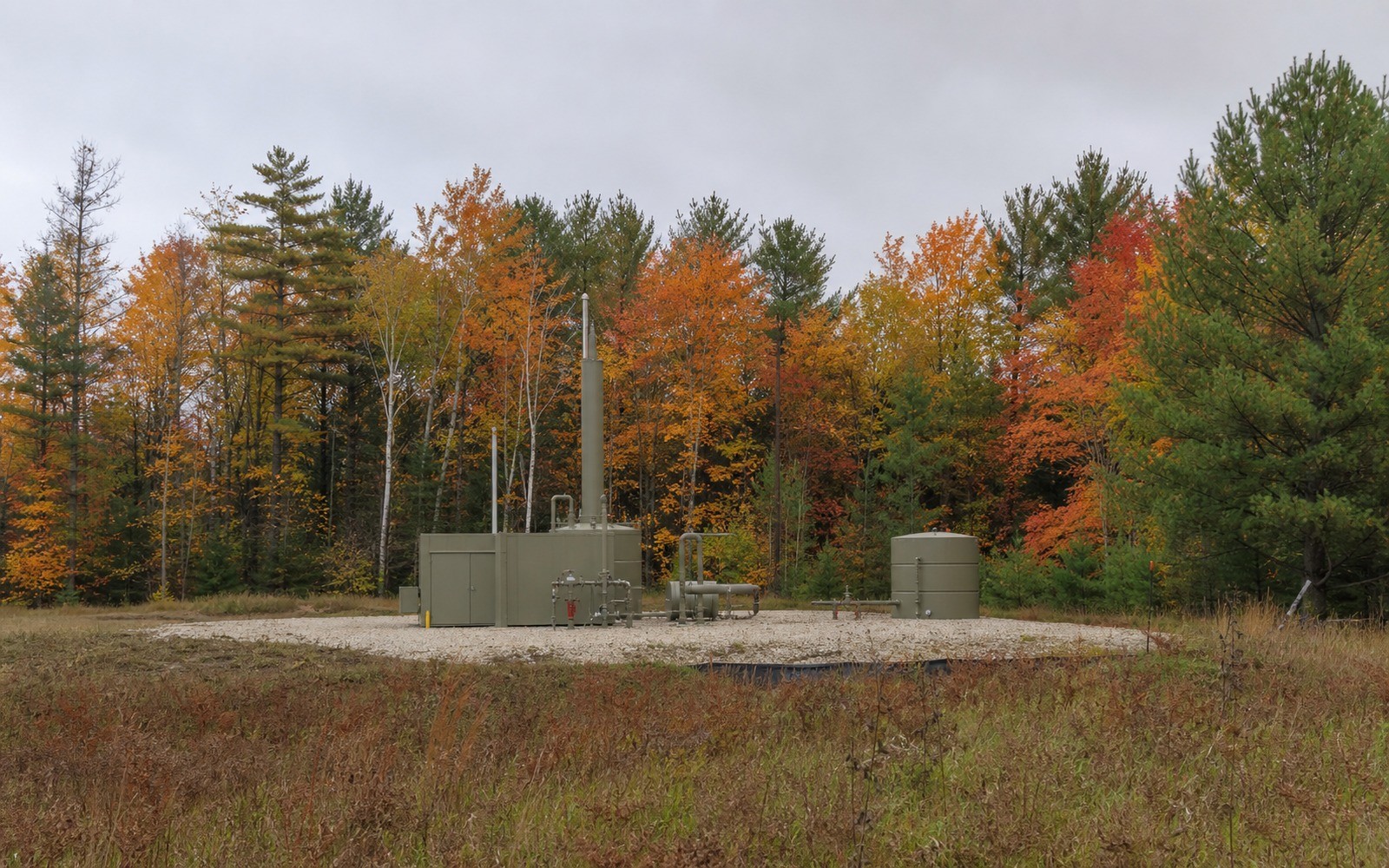
Antrim Shale Mineral Rights
Let's be straight about the Antrim Shale, it's a shallow, old, biogenic gas play, and if you're expecting a big drilling-upside story you're not going to get one from us.
Otsego, Montmorency, and Crawford Counties in Michigan's northern lower peninsula sit over the Antrim Shale, a formation that produces gas generated biologically rather than through the deep thermal cooking that creates gas in plays like the Haynesville or Marcellus. Antrim wells are shallow, typically a few thousand feet or less, and low pressure, and they were drilled heavily through the 1990s and into the 2000s. Very little new Antrim drilling has happened in a long time.
What that means for you as a seller: this is almost entirely a PDP conversation. Your value comes from what's already producing and its remaining decline, not from any realistic expectation of new wells.
Shallow, low pressure, and long, slow declines
One thing that actually works in your favor here: Antrim wells often show gentler, longer decline curves than deeper shale plays, because the biogenic gas generation and shallow, lower-pressure reservoir behave differently than a hard-fracked deep shale well's steep initial dropoff. A well drilled twenty-five years ago might still be producing modest but steady volumes today. That stability is a real asset if you have a long check history to show a buyer.
Bring as many years of statements as you can find. In a play this mature, a long, boring, steady record is worth more to a buyer's confidence than almost anything else you could hand them.
Don't let anyone sell you a drilling-upside story here
If a buyer offers you a premium based on future development potential in the Antrim Shale specifically, ask them to point to actual recent permits near your tract. We’d be surprised if they can. This basin's economics simply don't support a new-drilling narrative right now, and an honest offer should say so plainly rather than dress up a PDP number with speculative language.
That doesn't mean your minerals are worthless, plenty of Antrim owners collect steady, modest checks year after year, and that income stream has real, calculable value. It just means the conversation should be about what exists, not what might come.
Water production is part of the Antrim story too
Like other coalbed and shallow gas plays, Antrim wells often produce meaningful water alongside gas, and water handling costs affect the operator's net economics over a well's life. If your checks have trended down gradually over recent years beyond what you'd expect from gas decline alone, water handling costs on an aging well are a reasonable thing to ask your operator about.
What a fair Antrim offer actually rewards
A fair offer in this basin rewards documentation, not optimism. The owners who get the strongest numbers are the ones who show up with complete check history, a clear division order, and clean title, because that lets a buyer model your remaining production with real confidence instead of pricing in extra caution for the unknowns. There's no rig-count story to lean on here, so paperwork does the heavy lifting.
If your title passed through inheritance and hasn't been cleaned up at the county level, get that resolved before you go to market. In a basin where nobody's arguing about future drilling, a title gap is often the only thing standing between you and a straightforward, timely closing. Once that's sorted, most Antrim Shale sales move quickly, since there's little for a buyer to investigate beyond your production record and your paperwork, and even less for either side to negotiate over once the actual numbers are finally sitting on the table. A patient, well-documented seller usually gets a fair result here without much friction.
Straight Answers for Mineral Owners
Is there any chance of new drilling reviving Antrim Shale values?
Nothing is impossible, but there's no meaningful current activity supporting that expectation. Treat any offer that leans heavily on future drilling upside in this basin with real skepticism, and ask for specific, recent permit evidence if a buyer claims it.
Why does my old Antrim well still produce after twenty-five years?
Antrim wells often show gentler, longer decline curves than deeper, harder-fracked shale wells, partly due to the shallow depth and biogenic gas generation process. Long, steady production is common here and is actually a point in your favor when documenting value for a sale.
What's the single best thing I can bring to a buyer conversation?
The longest run of check history you can find. A mature play like this rewards documented stability more than almost any other factor, since it lets a buyer model your remaining decline with real confidence instead of guessing.
Should I expect a low offer just because it's a mature play?
Not necessarily low, just honestly priced on what's actually flowing rather than inflated with speculative upside language. A fair PDP-based offer on a well with a long, stable production history can still be a solid outcome.